Gifted child guide
Signs of giftedness in children: high potential and intellectual precocity
Parents often look for signs of giftedness to better understand a particular way of functioning, sometimes described as high intellectual potential or intellectual precocity.
Curiosity, quick understanding, sensitivity, or a sense of being out of step may draw attention.
These observations can matter, but they cannot identify high intellectual potential on their own.
This page presents common indicators and the limitations of an interpretation based only on signs.
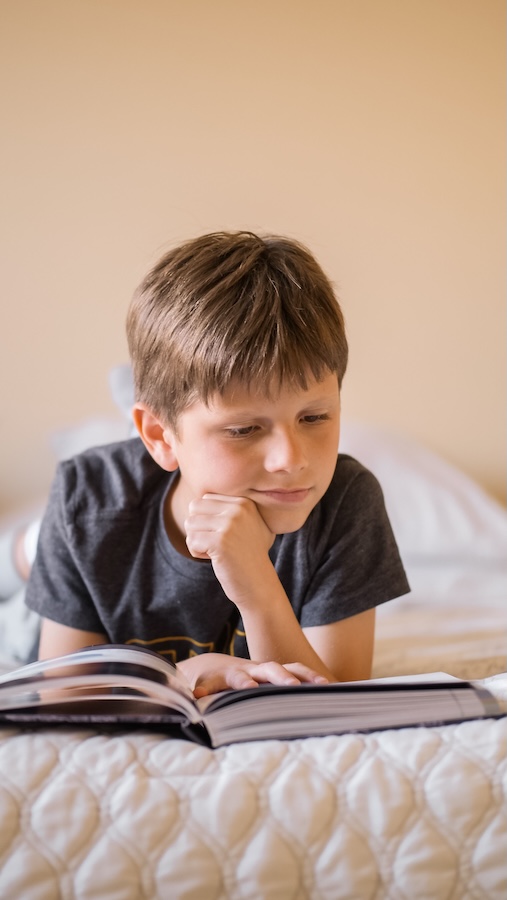
Signs of giftedness in children
Signs of giftedness in a child should be read as possible clues, never as isolated elements.
How should you interpret signs of giftedness in children?
Signs of giftedness are characteristics often reported in some gifted children, but they do not form an identification checklist.
They should be understood within the child’s history, age, school and family environment, and overall development.
Psychometric references encourage a distinction between everyday observations and dimensions assessed in a professional setting.
Commonly discussed signs
These are indicators frequently mentioned by families and professionals when a child seems to show a gifted pattern of functioning.
Strong curiosity
The child may ask many questions, seek meaning, or explore subjects intensely.
Ease of learning
Some learning may be quick, intuitive, or less linear than expected, sometimes raising the question of intellectual precocity.
Marked sensitivity
Strong sensitivity or a marked reaction to unfairness may be observed, without being specific to giftedness.
A sense of being out of step
The child may feel different in their interests, language, or relationships with others.
Why is one sign not enough?
An isolated observation can be misleading. A child may be very curious in one area, sensitive during a particular period, or struggling for reasons unrelated to giftedness.
The aim is therefore to observe recurrence, contexts, and the actual impact on the child’s life.

Observable indicators
A sign becomes more meaningful when it recurs across settings and over time.
When should you explore further?
Exploration can be useful when observed signs come with discomfort, a mismatch, or a need for understanding.
- persistent signs across several settings
- boredom at school or lack of motivation
- relationship difficulties
- emotional overload
- persistent questions from parents
Why are lists of signs so appealing?
A list creates the impression that recognizing several behaviors is enough to get an answer. Yet traits often associated with giftedness—curiosity, advanced vocabulary, boredom, sensitivity, humor, a need to understand, or an interest in adults—also occur in many children who are not gifted.
These behaviors depend on age, upbringing, learning opportunities, temperament, and context. A highly verbal child may have had extensive exposure to books; another may reason perceptively while saying little in an unfamiliar situation. The absence of a popular sign therefore does not rule out a profile, and its presence does not confirm it.
Signs become more useful when they help formulate a question rather than add up points. You might ask how the child learns a new concept, whether they spontaneously transfer what they have understood, how they explain their reasoning, and whether the level of challenge changes their engagement.
Observe a trajectory rather than a snapshot
Development is understood over time. An early skill, its stability, and how it evolves provide more information than an isolated performance. Parents can recall when an interest or strength appeared, how the child responds to something new, and whether they regularly seek greater complexity.
The trajectory also includes changes in context. Starting school, moving, a stressful period, or higher academic expectations may reveal strengths or difficulties that were less apparent before. This does not retroactively turn every behavior into a sign of giftedness; it helps explain why the question is arising now.
Observations from different adults may diverge. A child who is quiet at school may argue extensively at home; a high-achieving student may avoid unstructured tasks outside school. These differences are information to explain, not proof that one perspective is wrong.
Turn observations into an assessment question
A useful request goes beyond “Is my child gifted?” It can ask: does the academic level seem poorly matched? Why do results contrast with oral understanding? Would more in-depth learning help? Is there a learning or attention difficulty to examine separately?
An online questionnaire can help parents organize observations, but it reproduces neither the conditions nor the interpretation of a psychometric assessment. Reported behaviors are influenced by expectations, recent context, and the comparisons the adult uses.
When the question has a real impact on schooling, well-being, or family decisions, a trained professional can select appropriate tools and explain their limitations. The most useful result is not a list of confirmed signs, but a more precise understanding of the child’s functioning and needs.
Examine familiar signs systematically
Asking many questions can reflect curiosity, a need for reassurance, a way to extend a conversation, or a particular interest. This behavior becomes informative when we consider the quality of the connections made, persistence in exploring, and what the child does with the answers, rather than simply the number of questions.
Preferring older children or adults may reflect shared interests, family opportunities, difficulty within the current group, or a relationship style. It does not mean a child cannot relate to peers or necessarily has advanced intellectual abilities overall.
Boredom and speed should be checked against mastery. Finishing quickly and accurately is different from rushing through a task, avoiding writing, or giving an answer without being able to explain it. A more complex task may show whether engagement and quality improve together.
Sensitivity, intensity, and fairness are also broad terms. A strong emotion may depend on temperament, anxiety, context, or a specific experience. An interest in rules can arise from a need for predictability as much as from advanced moral reasoning.
None of these observations is useless. Their value emerges when they describe a coherent trajectory and open a specific question. They lose value when used as criteria to add up, or when every aspect of a child becomes confirmation of a hypothesis already chosen.
Scenario: a child asks very advanced questions
Questions about death, space, or justice often impress adults. It helps to see whether the child understands the answers, connects several ideas, rephrases them, and spontaneously returns to the subject. Sophisticated vocabulary does not guarantee that every concept is understood.
Parents can respond at the level of the question, check what the child already imagines, and offer an age-appropriate resource. They do not need to turn every exchange into a test or consistently push toward adult content.
If this learning style forms part of a broader trajectory and raises a concrete school need, it contributes to the reason for assessment. On its own, it remains an expression of curiosity worth nurturing without an automatic conclusion.
Signs that mainly call for looking at something else
Some situations first call for a response to the visible problem. A sudden drop in results, school refusal, sleep problems, a general loss of interest, or very negative comments about oneself should not be treated as simple indicators of giftedness. Their impact warrants specific investigation.
Likewise, persistent difficulties with reading, writing, math, or attention deserve a targeted description. A child’s abilities may compensate for part of the problem, but waiting for giftedness to be confirmed before assessing learning can delay potentially necessary support.
Behavior appearing in only one setting invites examination of that context: a relationship, level of demand, noise, bullying, a recent change, or a particular instruction. Generalizing it to the child’s entire personality loses this information.
Dangerous behavior, unusual violence, or acute distress require proportionate and sometimes urgent help. A giftedness checklist is not a triage tool and should never delay contacting appropriate services.
This order of priorities does not conflict with exploring giftedness. It puts safety, health, and access to learning first, then uses the question of giftedness when it adds understanding or informs another decision.
A gradual interpretation
01
Identify
note the signs that recur regularly
02
Put in context
consider them in relation to the child’s age and experience
03
Consult
seek professional advice if needed
Cereya Giftedness
An initial approach with Cereya Gifted Child
Cereya Gifted Child offers an informative online assessment designed for parents who want to better understand their child’s cognitive functioning.
The assessment combines an age-appropriate questionnaire with cognitive exercises, providing a contextualized interpretation of giftedness in children.
This approach can offer additional insight, without reporting an IQ score or replacing an assessment suited to the child’s age.
- age-appropriate questionnaire
- age-appropriate cognitive exercises
- interpretation by dimension
- immediate free report
Another question about attention?
Some gifted children may also experience attention difficulties, without a systematic link between giftedness and ADHD being established.
Cereya offers a separate educational assessment to help parents explore this question using child-appropriate reference points.
Initial summary included; detailed analysis available afterward.
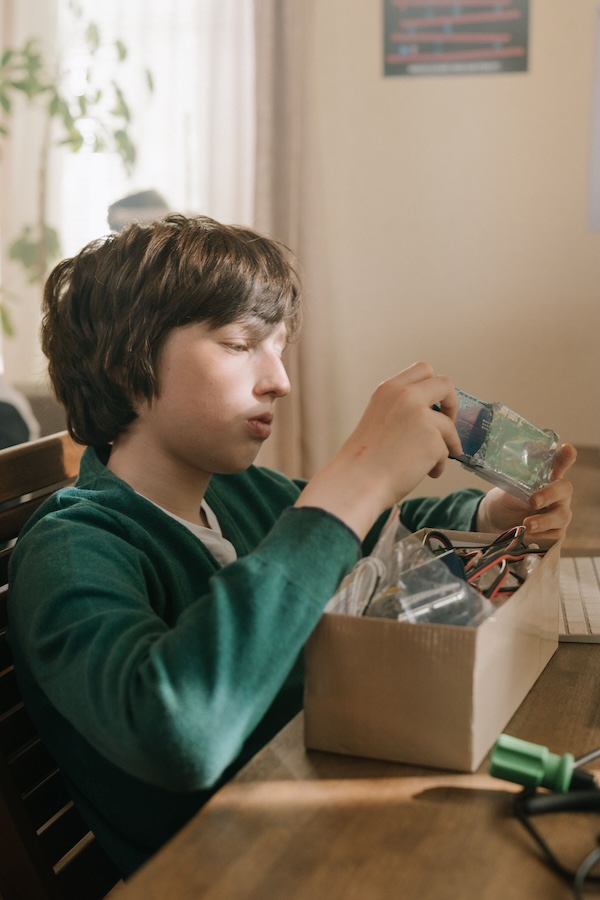
Insights and limitations
Signs are starting points for reflection, not conclusions.
FAQ
Frequently asked questions
What are the signs of giftedness in a child?+
Commonly discussed signs include curiosity, rapid learning, a need to understand, sensitivity, and a sense of being out of step. No sign alone is enough to establish giftedness or intellectual precocity.
Can a gifted child struggle?+
Yes. Some gifted children experience school, relationship, or emotional difficulties despite good abilities.
Is a child who is ahead necessarily gifted?+
No. Being ahead or showing early development in one domain is not enough to conclude that a child has high intellectual potential. The term “intellectual precocity” is still used for children, but it must always be considered in the overall context.
Can giftedness be identified through signs alone?+
No. Signs can support reflection, but only a professional assessment can explore this question thoroughly.
Why should signs be connected with context?+
Because giftedness concerns intellectual functioning as a whole. Visible signs need to be connected with broader considerations such as reasoning, working memory, language, school context, and emotional development.
When should you explore observed signs further?+
Further exploration can be useful if signs persist and are associated with distress or difficulties in several settings.
References and resources
This page draws on references in child psychology, psychometrics, and support for gifted individuals.
- Bucaille, A., Jarry, C., Allard, J., Brochard, S., Peudenier, S. & Roy, A. (2022). Neuropsychological Profile of Intellectually Gifted Children: A Systematic Review. Journal of the International Neuropsychological Society, 28(4), 424–440. DOI: 10.1017/S1355617721000515. PMID: 33998437.
- Tourreix, E., Besançon, M. & Gonthier, C. (2023). Non-Cognitive Specificities of Intellectually Gifted Children and Adolescents: A Systematic Review of the Literature. Journal of Intelligence, 11(7), 141. DOI: 10.3390/jintelligence11070141. PMID: 37504784.
- David Wechsler — WISC-V
- Éduscol — resources on gifted students
- Nicolas Gauvrit — Les surdoués ordinaires
- American Psychological Association — resources on intelligence and giftedness