Gifted adult guide
How can I tell if I am gifted?
Many adults eventually wonder whether they might be intellectually gifted. This question sometimes follows reading a book, speaking with a professional, discovering personal accounts, or a longstanding sense of being out of step.
Yet there is no single sign that can establish giftedness. Intellectual giftedness can appear differently depending on the individual, personality, environment, and life history.
This page presents characteristics most frequently associated with giftedness, misconceptions to avoid, the limits of self-assessment, and different ways to explore the question.

Understand your functioning
Taking time to put your questions into words often helps bring clarity.
What is intellectual giftedness?
High Intellectual Potential, often abbreviated HPI in French, generally refers to a level of intellectual functioning significantly above the population average. Terms such as high potential and gifted are also used in everyday language.
In psychometric assessment, giftedness is often associated with a full-scale IQ around 130 or above on a standardized scale, such as the WAIS for adults. This statistical reference point should nevertheless be interpreted cautiously, because a comprehensive assessment is more than a number.
Giftedness can also be considered as a particular way of processing information: quick reasoning, ease in making connections, a need for deep understanding, considerable curiosity, or strong mental intensity. These elements alone cannot identify giftedness, but they can inform personal reflection.
The term intellectual precocity is still sometimes used, particularly for children, but is now less central when discussing gifted adults.
Signs frequently associated with giftedness
The signs below are not proof. They simply describe characteristics often reported by people exploring the possibility of giftedness.
Strong intellectual curiosity
Some people recognize a constant need to learn, understand, or explore new subjects. This curiosity can span very different fields and sometimes shift quickly over time.
Fast, associative thinking
Thinking may feel fast, connect several ideas, or anticipate different possibilities. Some people describe “branching thought,” although this expression should be used cautiously.
Strong analytical abilities
A need for coherence, a desire to understand underlying mechanisms, or a tendency to examine situations from several angles may be present in some gifted people.
Heightened sensitivity
Some people describe emotional intensity, strong responsiveness to their environment, considerable empathy, or heightened sensitivity to injustice. These features can also occur outside giftedness.
Feeling out of step
Feeling that you do not always function like others recurs frequently in personal accounts. It may involve interests, thinking pace, communication, or attitudes toward social norms.
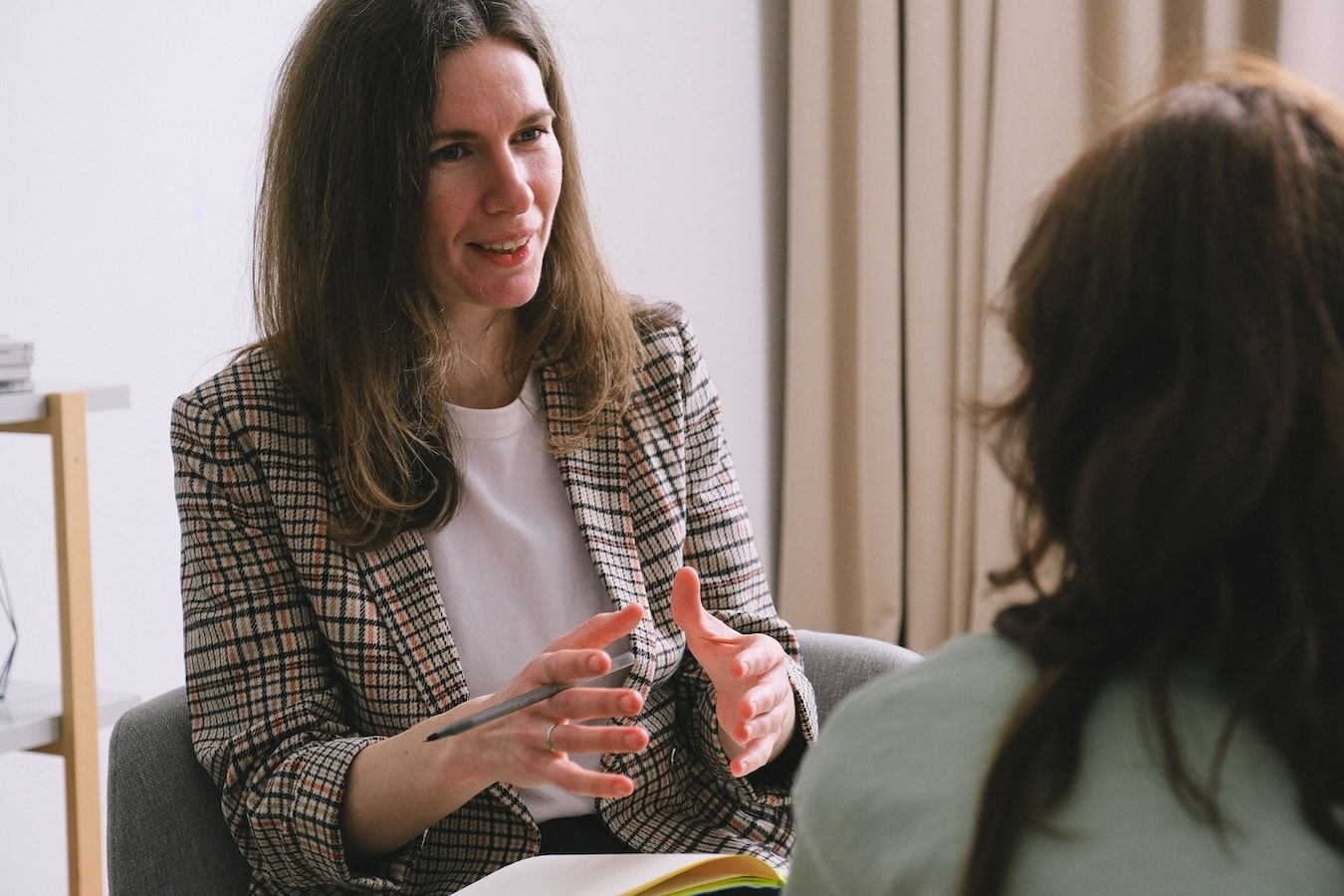
Put it into words
A conversation can help distinguish feelings, hypotheses, and actual needs.
Common misconceptions about giftedness
“Gifted people always succeed academically”
This is false. Some gifted people have a very smooth educational path; others face substantial difficulties. Boredom, a lack of study methods, pressure, anxiety, or other characteristics can strongly influence that path.
“Giftedness necessarily makes you happy”
Giftedness is neither a guarantee of success nor an automatic source of distress. It is a way of functioning that people can experience very differently.
“You can recognize a gifted person immediately”
Intellectual functioning is often invisible from the outside. A person may have strong abilities without clearly expressing them in every situation.
“All gifted people are alike”
There is no single profile. Two gifted people may function very differently depending on their history, environment, personality, or other associated characteristics.
Can you determine on your own whether you are gifted?
It is possible to identify characteristics that connect with questions about giftedness, but reaching a conclusion alone is difficult.
Questionnaires and self-assessments can help structure reflection. They can highlight tendencies, experiences, or ways of functioning worth exploring. However, they cannot confirm or rule out giftedness.
They should therefore be considered an initial informative step, rather than a definitive conclusion.
A possible path
01
Questionnement
notice what recurs
02
Exploration
organize your observations
03
A professional conversation
add context when needed
How does an online test differ from a psychological assessment?
An online test can be useful for beginning reflection. It can help put personal observations into words, identify recurring themes, and potentially prepare for a conversation with a professional.
A psychological or psychometric assessment conducted by a professional goes much further. It uses standardized tools, controlled testing conditions, clinical interpretation, and an overall analysis of the person’s functioning.
For adults, the WAIS is among the most widely used tools for assessing intellectual functioning. It provides several indices, rather than only an overall score.
Cereya follows this approach to interpretation by dimension: fluid reasoning, cognitive indicators, consistency, and interpretive context. Its approach remains informative and does not reproduce a professional psychometric assessment.
When might exploring this question be useful?
Exploring the possibility of giftedness may be useful when someone has long experienced certain features:
- feeling out of step
- strong mental intensity
- considerable curiosity
- a need for deep understanding
- frequent boredom in certain settings
- heightened sensitivity or emotional reactivity
- an unconventional path
- difficulty finding your place despite strong abilities
The goal is not necessarily to seek a label, but to understand aspects of your functioning better.
Cereya Giftedness
An initial approach with Cereya Giftedness
Cereya Giftedness offers an informative online assessment for adults who want to explore aspects of their cognitive functioning.
Its interpretation draws on cognitive psychometrics without claiming to replace a WAIS assessment or a psychologist’s advice.
The platform combines:
- a behavioral questionnaire
- cognitive exercises
- an analysis of results
- a free report
- an optional detailed report
This approach does not replace a psychological assessment or WAIS test conducted by a professional. It can nevertheless offer an initial structured, accessible, educational interpretation.

Move forward with nuance
An initial structured interpretation can ease uncertainty without closing off reflection.
FAQ
Frequently asked questions
How can I know if I’m gifted without taking a test?+
There is no method that can establish giftedness with certainty without formal assessment. Some characteristics may nevertheless prompt questions and justify exploration.
Can you be gifted without knowing it?+
Yes. Some people discover this possibility in adulthood, sometimes after personal reflection, a conversation with a professional, or the identification of giftedness in their child.
Is an online giftedness test reliable?+
An online test can provide useful indications and help structure reflection. It does not replace a psychometric assessment conducted by a professional.
What is the reference test for giftedness in adults?+
For adults, the WAIS is one of the most widely used tools for professionally assessing intellectual functioning. It must be interpreted by a trained psychologist.
Is giftedness a medical diagnosis?+
No. Giftedness is not a medical diagnosis. It generally involves evaluating intellectual functioning using psychometric tools.
Do HPI, high intellectual potential, and giftedness mean the same thing?+
HPI is the French abbreviation for High Intellectual Potential. Terms such as high potential and gifted are sometimes used in everyday language. Intellectual precocity is more associated with children and is now less commonly used when discussing gifted adults.
Does Cereya’s approach draw on recognized references?+
Cereya draws on references such as cognitive psychometrics, the CHC model, Wechsler scales, and Raven’s matrices to structure its approach. It does not replace professional administration or a psychologist’s interpretation.
References and resources
This page draws on psychometric research and recognized references in cognitive assessment.
- David Wechsler — WAIS-IV : Administration and Interpretation
- Nicolas Gauvrit — Les surdoués ordinaires
- American Psychological Association — resources on intelligence and giftedness