Gifted child guide
Gifted children at school: needs, boredom, and high potential
Questions about giftedness at school often arise when parents observe boredom, strong curiosity, ease of learning, or, conversely, unexpected difficulties in a gifted child.
A gifted child may have a smooth school experience, but this is not always the case.
The school context, relationship with learning, motivation, organization, and emotional environment can strongly influence their experience.
This page offers careful guidance for understanding possible needs without reducing a child to a label.

Giftedness at school
Giftedness can be experienced very differently at school depending on the child, the context, and the adults around them.
Does giftedness or high potential change the relationship with school?
Giftedness, or high intellectual potential, can influence a child’s relationship with learning, but it does not determine school success on its own.
Some children learn very quickly; others need a more explicit framework, support with methods, or a better understanding of their emotions.
Cognitive psychometric reference points encourage consideration of several dimensions of intellectual functioning, not only grades or speed of learning.
Possible difficulties at school
The school situations families report vary widely. They should always be analyzed in the child’s context.
Boredom or insufficient stimulation
Children may disengage when tasks seem too repetitive or too far removed from their interests.
Sometimes fragile study methods
Ease of learning can conceal a lack of methods that becomes more apparent as demands increase.
An intense emotional experience
Some children react strongly to comments, unfairness, or relationship tensions.
How can you work with the school?
The discussion can cover pacing, stimulation needs, organizational difficulties, emotional experience, and peer relationships.
The aim is not to request special treatment as a matter of principle, but to find what helps the child learn and feel they belong.
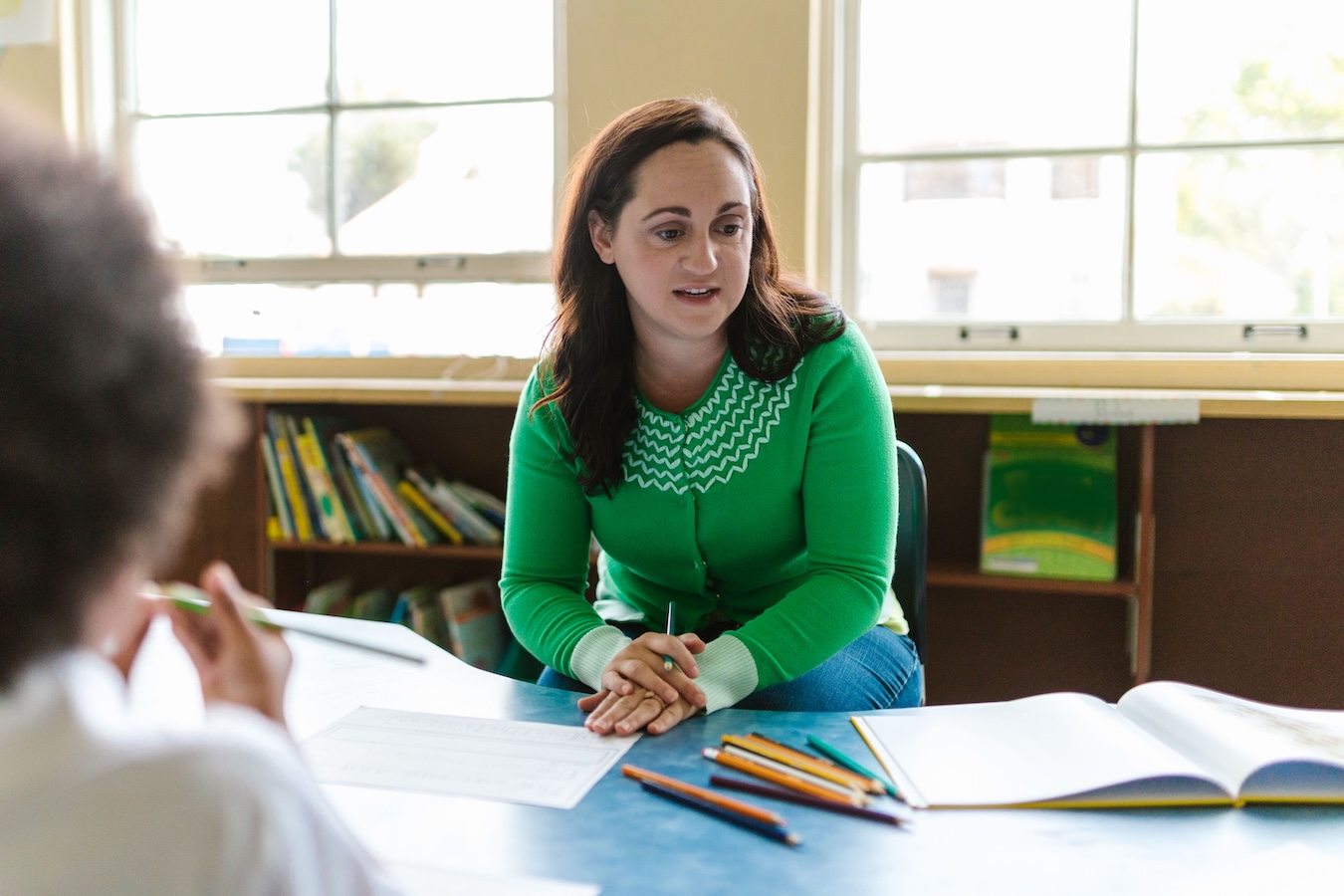
Cooperation
Conversations with school benefit from starting with concrete observations rather than a conclusion reached too quickly.
When should you explore the question further?
Exploration can be useful when observations recur and affect well-being or learning.
- recurring boredom
- strong curiosity
- feeling out of step with peers
- fatigue or overload
- organizational difficulties
- strong emotional reactivity
Understand what school actually asks of a child
School success does not depend only on ease of reasoning. Students must also listen to group instructions, accept a shared pace, make procedures automatic, produce legible work, memorize, review, manage supplies, and show what they know in an expected format. A child may understand a concept quickly yet find several of these operations very demanding.
This distinction helps avoid two opposite mistakes. The first is assuming that a child with strong abilities should succeed everywhere without help. The second is concluding that inconsistent results necessarily invalidate the possibility of giftedness. Abilities, acquired learning, and observed performance interact, but they are not the same thing.
Understanding a school situation therefore requires examining the specific task. Must the child discover a concept, repeat an established procedure, write quickly, sustain attention, work in a group, or manage several steps? The same student may be very comfortable in a complex discussion and much less available for a series of repetitive exercises or a long written assignment.
Understand
Grasping a concept or building an argument does not guarantee that every school procedure has already been learned.
Produce
A correct answer also requires following the format, managing time, writing, and checking the work.
Adapt
The classroom imposes a pace, transitions, and shared attention that can change engagement.
Four school situations that call for different responses
A child who finishes very quickly and truly masters the content may need enrichment or a better-matched level of challenge. A child who works quickly but makes many errors may mainly need to learn to review work, explain their reasoning, or slow down at certain steps. The two situations may look similar from a distance, but they do not call for the same response.
A student who disengages only in a repetitive subject is not in the same situation as a student who avoids all writing tasks, reports pain before school, or can no longer learn. In the second case, fatigue, anxiety, a learning difficulty, attention, sleep, or a relationship experience should also be examined.
Finally, a child may be intellectually stimulated yet still struggle with transitions, cooperation, or uncertainty. Adding more complex exercises does not automatically resolve these dimensions. A useful response sometimes combines cognitive challenge, explicit expectations, organization tools, and relational safety.
- Quick mastery of content already learned.
- Inconsistent results despite apparent understanding.
- Avoidance tied to a particular task or format.
- A broader impact on well-being or school attendance.
Build a useful dialogue with the educational team
An effective conversation begins with shared facts: completed work, assessments, speed of execution, recurring errors, moments of disengagement, and conditions in which the child learns better. Parents have observations from home; the teacher sees functioning within a group and over time. These perspectives are complementary.
It is often better to choose one or two observable adjustments than to request an overall solution. For example: reduce some repetition after verifying mastery, offer a task that explores the topic further, make the steps of a long assignment explicit, or agree on a signal when the child loses track. A trial period then allows the actual effect to be assessed.
If difficulties persist despite adjustments, the aim is not to accumulate explanations but to refine the question. Is the challenge level poorly matched, or is there an attention difficulty, a learning disorder, anxiety, fatigue, or several factors? A professional may help when the impact persists or observations remain contradictory.
Track an adjustment over time
A school adjustment is useful only if everyone knows what it is meant to improve. Before starting, adults can choose a few simple indicators: time taken to begin a task, number of assignments completed, the kinds of errors made, participation, fatigue at the end of the day, and the child’s perspective. Grades alone sometimes change too slowly to reveal the first effects.
The observation period must be long enough to move beyond the novelty effect. An enrichment activity may generate excitement for a few days without changing engagement in the longer term. Conversely, a new system may take time to learn before it actually reduces the workload. A scheduled review prevents a trial from continuing indefinitely without a conclusion.
Children should be able to share their views through accessible questions: what has become easier? What still takes a long time or feels confusing? When did you learn something new? Their experience does not replace school observations, but it reveals meaning and effort that their work does not show.
If an adjustment does not work, that does not prove the need is absent. Check how it was implemented, how specific the hypothesis was, and other factors. A more challenging task may fail because it is assigned on top of regular work, because instructions remain unclear, or because writing difficulties still consume most of the effort.
Finally, monitoring should consider well-being as much as performance. Better results accompanied by exhaustion, daily tension, or a growing fear of mistakes are not a sustainable balance. The aim is for children to learn, progress, and participate without a disproportionate cost.
Scenario: strong oral answers, but unfinished work
A child understands the lesson and participates accurately, yet achieves inconsistent results because their exercises are incomplete. It may be tempting to attribute this to boredom. However, starting, copying, managing steps, time, and reviewing work should be observed before choosing an explanation.
The school can check oral understanding, make the steps visible, and compare a short task with a longer assignment. If the content is mastered but putting it into a finished form remains demanding, support should focus on organization or writing. If a more complex task also restores the quality of the work, adjusting the challenge becomes more relevant.
A reasonable decision is therefore neither to systematically assign more work nor to excuse every missing assignment. It is to preserve access to complexity while teaching the procedures needed to show what the child knows.
What children should gradually learn about their own functioning
A successful adjustment does not depend solely on adults. As children grow, they can learn to recognize when a task is already mastered, when it feels difficult for another reason, or when they need clearer instructions. This metacognition helps them make a specific request rather than withdraw or say everything is pointless.
They can also distinguish speed from mastery. Finishing first is not always the goal; explaining, checking, and transferring a procedure are part of learning. Conversely, having to make an effort does not necessarily mean the level is well matched: a repetitive task may remain demanding without producing new knowledge.
Organization tools should gradually become their own. A list prepared by an adult can first serve as a model, then be completed with the child, and finally be created by them. Support is withdrawn according to observed independence, not solely age or assumed abilities.
Children can also learn to give feedback on an adjustment: what helps, what makes things difficult, and what they would like to try. Their view is neither a demand nor merely a personal account; it becomes one source of information among others for adjusting the plan.
This self-knowledge is a lasting educational goal. It prepares students for later settings where the level, format, and expectations will never fit perfectly, while helping them find strategies and ask for proportionate support.
A gradual approach
01
Observe
identify recurring school situations
02
Talk
speak with the school and professionals
03
Adjust
look for responses proportionate to the needs
Cereya Giftedness
An initial approach with Cereya Gifted Child
Cereya Gifted Child offers an informative online assessment designed for parents who want to better understand their child’s cognitive functioning.
The assessment combines an age-appropriate questionnaire with cognitive exercises, providing a contextualized interpretation of giftedness in children.
This approach can offer additional insight, without reporting an IQ score or replacing an assessment suited to the child’s age.
- age-appropriate questionnaire
- age-appropriate cognitive exercises
- interpretation by dimension
- immediate free report
Another question about attention?
Some gifted children may also experience attention difficulties, without a systematic link between giftedness and ADHD being established.
Cereya offers a separate educational assessment to help parents explore this question using child-appropriate reference points.
Initial summary included; detailed analysis available afterward.

Dialogue and adjustment
Understanding a child’s needs can make conversations with the adults supporting them calmer and more constructive.
FAQ
Frequently asked questions
Does a gifted child necessarily succeed at school?+
No. Some gifted children succeed easily at school, while others experience boredom, lack of motivation, or difficulties adapting.
What can you do if a gifted child is bored in class?+
It can help to observe recurring patterns, speak with the educational team, and consult a professional if needed.
Does boredom at school prove giftedness?+
No. Boredom can have many causes. It should be considered in its school, emotional, and relationship context.
Does a gifted child need school accommodations?+
Adjustments depend on the child, the school, and the difficulties observed. They should be discussed with the relevant professionals.
Can a school identify giftedness on its own?+
School observations can inform reflection, but they do not replace an appropriate assessment. Professional tools, such as the Wechsler scales for children, place results within a psychometric and clinical framework.
How can you discuss giftedness with the school?+
The conversation can focus on concrete observations, stimulation needs, fatigue, organization, and the child’s experience.
References and resources
This page draws on established educational and psychometric resources concerning giftedness in children.
- Carter, S. S., Avci, A. H. & Mammadov, S. (2025). School Experiences of Gifted Adolescents and Their Peers. Psychology in the Schools, 62(9), 3273–3284. DOI: 10.1002/pits.23537.
- Raoof, K., Shokri, O., Fathabadi, J. & Panaghi, L. (2024). Unpacking the underachievement of gifted students: A systematic review of internal and external factors. Heliyon, 10(17), e36908. DOI: 10.1016/j.heliyon.2024.e36908. PMID: 39286082.
- Ministère de l’Éducation nationale — Éduscol. Ressources pour la personnalisation des parcours des élèves à haut potentiel. Ressource institutionnelle officielle.
- Éduscol — resources on gifted students
- David Wechsler — WISC-V
- Nicolas Gauvrit — Les surdoués ordinaires
- American Psychological Association — resources on giftedness