Gifted child guide
Is my child gifted? Observations, assessment, and next steps
Many parents wonder at some point whether their child might be gifted—that is, have high intellectual potential.
This question may arise after comments from school, strong curiosity, a sense of being out of step, marked strengths, or, conversely, unexpected difficulties.
Yet there is no single sign that can establish that a child is gifted.
This page helps clarify the parent’s question, gather useful observations, and choose next steps, including professional assessment when appropriate.

A parent’s question
Questions about giftedness in a child call for an overall, gradual approach suited to their age.
What does giftedness or high intellectual potential mean in a child?
Giftedness in children generally refers to intellectual functioning significantly above average, evaluated with age-appropriate tools. The terms “high intellectual potential” and “intellectual precocity” are also sometimes used.
An assessment is more than a number. It must consider the child’s context, history, lived experience, and a professional’s interpretation.
Psychometric models remind us that intellectual functioning brings together several dimensions, such as verbal reasoning, fluid reasoning, and working memory.
Which observations should you gather before going further?
Observations collected in several settings can help frame a specific question, but they do not constitute proof of giftedness.
Strong intellectual curiosity
The child may ask many questions, seek a deep understanding, or show interest in subjects unusual for their age.
Quick, associative thinking
Some children learn quickly or make connections between seemingly unrelated ideas.
A sense of being out of step
Some parents report that their child does not always feel in step with other children.
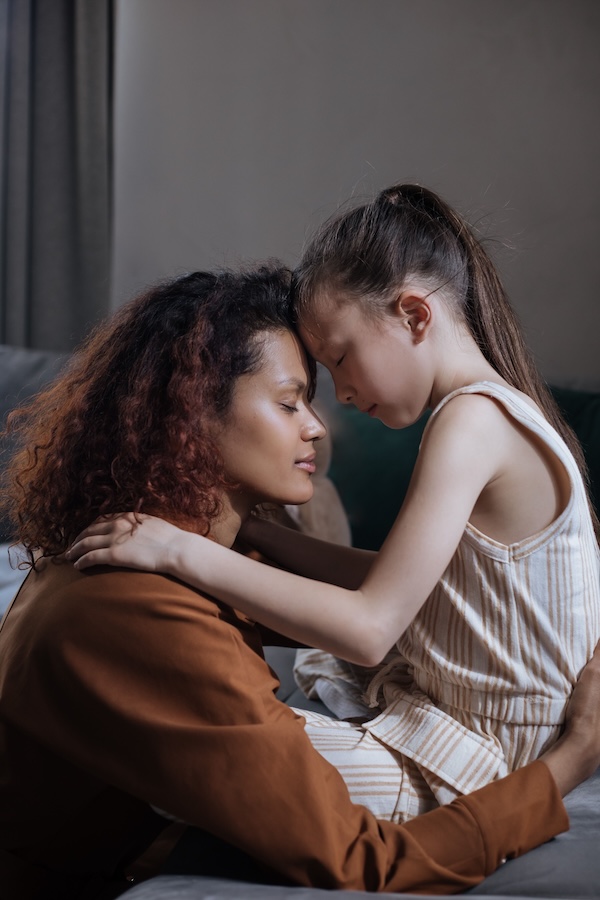
Observe without drawing conclusions
Observing repeated situations helps distinguish a passing impression from a more lasting pattern of functioning.
Why does context matter?
School, home, peer relationships, and emotions can provide different indications.
A child may be comfortable in some settings and struggle in others, without this allowing an immediate conclusion.
When should you explore the question further?
Exploration can be useful when observations recur and affect well-being, learning, or relationships.
- persistent questions from parents
- mismatches at school or in relationships
- recurring boredom or lack of motivation
- strong emotional intensity
- difficulties despite good abilities
Start with the question that truly matters to the parents
Questions about giftedness rarely arise without context. They may stem from very rapid learning, advanced vocabulary, or a need to understand deeply, but also from school difficulties, boredom, intense emotions, or a sense of being different. These starting points are not equivalent and do not necessarily lead to the same process.
Before looking for signs, it helps to state what you want to understand. Do you want to adjust the academic level, explain inconsistent results, better support frustration, address a question of identity, or gain insight into intellectual functioning? A specific question helps determine the assessment and avoids expecting the word “giftedness” to solve every problem at once.
This clarification also protects the child from excessive expectations. The aim is not for them to confirm a family intuition or fit an image of precocity. It is to understand their current needs, resources, and demanding situations, whether or not giftedness is subsequently identified.
Advanced development, intense interest, and performance: three different reference points
A child may be ahead in one area without showing the same difference everywhere. They may read early and have age-typical motor development, reason perceptively while needing help with organization, or know a great deal about a particular interest without being advanced across all learning.
An intense interest can produce impressive expertise because the child spends a lot of time on a subject. This expertise tells us about motivation and knowledge; on its own, it does not measure overall intellectual functioning. Likewise, excellent school results depend on context, learning, and methods, not only reasoning ability.
The idea of a profile is therefore more useful than a list of signs. It invites us to consider contrasts across domains, ways of learning, strategies used, and adaptation to age-related demands. A professional assessment can then examine these dimensions using standardized tools and contextualized interpretation.
Advanced development
A skill may emerge early without every dimension of development progressing at the same pace.
Expertise
A well-supported interest can lead to very detailed knowledge in a specific area.
Functioning
Assessment looks for a combination of abilities and contrasts, not the presence of a striking behavior.
What can a professional assessment offer?
Psychometric assessment uses age-appropriate tools under standardized conditions. The professional goes beyond an overall score: they examine response quality, differences between indices, behavior during tasks, the child’s history, and the family’s question.
Results do not automatically explain every difficulty. An intellectual assessment alone does not establish ADHD, dyslexia, an anxiety disorder, or the cause of distress. When these questions arise, other information or targeted assessments may be needed.
The process is most useful when it leads to proportionate decisions: an educational adjustment, understanding a contrast, further exploration, or simply easing a question that has become overwhelming. If no concrete decision or need is associated with the request, taking time to clarify the goal may be preferable to a rushed assessment.
When to assess now, and when to keep observing
An assessment is especially relevant when a concrete decision depends on understanding the profile: a school adjustment, a large gap between apparent abilities and results, distress around learning, or a need to distinguish several hypotheses. The reason for seeking assessment should be explained to the professional before tools are chosen.
It may be reasonable to observe longer when the question arises from an isolated behavior, a recent comparison, or a period of change. Structured observation and a conversation with the school can then help establish whether the pattern is stable and in which settings it appears.
The child’s age and current condition matter. An assessment during significant fatigue, an acute crisis, illness, or strong refusal may not answer the initial question accurately. The professional can advise on timing, adapt the setting, or suggest addressing the factor disrupting functioning first.
Choosing a practitioner should not depend on a promised result. It helps to ask which tools will be used, how other hypotheses will be considered, what the report includes, and how findings will be explained to the child. Nuanced interpretation matters as much as administering the tasks.
A new question may arise after the assessment. A high result does not automatically explain anxiety or school difficulties; a result that does not confirm giftedness does not make the needs less real. Next steps should return to the original concern and what will concretely help the child.
Scenario: the question arises after a comment from school
A teacher says the child understands quickly but seems elsewhere. Before scheduling an assessment, parents can ask for examples: which concepts are already mastered, in which tasks disengagement appears, and how the child reacts when more complex work is offered.
At home, they can observe how the child learns something new without adding informal tests. The aim is to see strategies, questions, and differences across settings, not to manufacture proof.
If observations converge and a school decision or persistent difficulty calls for a more precise profile, assessment makes sense. If they mainly reveal recent fatigue or a particular teaching approach, a targeted adjustment can be tried first.
Prepare for the report and use it over time
Before the feedback appointment, parents can revisit their original question and note what they need to understand in order to act. They can ask how to interpret differences between results, which conclusions are well supported, what limitations apply, and which future observations would be useful.
The report should not automatically be shared with every adult. Families can share information relevant to learning and adjustments with the school while protecting personal data that has no educational purpose. Children should be involved according to their age.
Recommendations are best translated into a few observable actions. “Provide more stimulation” remains too vague; specifying the type of challenge, subjects, mastery conditions, and follow-up makes the suggestion assessable. Likewise, “work on confidence” needs to become a concrete situation and goal.
Needs change over time. An adjustment that works in elementary school may no longer be enough in middle school, and organizational difficulties may become more visible as independence increases. The assessment provides a reference point, not a permanent prescription for the child’s entire schooling.
Children can also gradually revisit their own profile. An age-appropriate explanation helps them understand their strengths without believing they must succeed at everything, and their contrasts without defining themselves by a weakness. Taking ownership of this understanding is often more useful than a dramatic announcement of the result.
A process for parents
01
Observe
identify patterns that recur in several settings
02
Discuss
speak with the school or a professional
03
Assess
consider an age-appropriate assessment if needed
Cereya Giftedness
An initial approach with Cereya Gifted Child
Cereya Gifted Child offers an informative online assessment designed for parents who want to better understand their child’s cognitive functioning.
The assessment combines an age-appropriate questionnaire with cognitive exercises, providing a contextualized interpretation of giftedness in children.
This approach can offer additional insight, without reporting an IQ score or replacing an assessment suited to the child’s age.
- age-appropriate questionnaire
- age-appropriate cognitive exercises
- interpretation by dimension
- immediate free report
Another question about attention?
Some gifted children may also experience attention difficulties, without a systematic link between giftedness and ADHD being established.
Cereya offers a separate educational assessment to help parents explore this question using child-appropriate reference points.
Initial summary included; detailed analysis available afterward.

Move forward systematically
The most useful approach often involves observing, considering different explanations, and seeking professional advice if questions persist.
FAQ
Frequently asked questions
How can I tell if my child is gifted?+
No single sign can establish that a child is gifted or has high intellectual potential. A psychometric assessment conducted by a professional remains the reference.
Can a gifted child have difficulties at school?+
Yes. Some gifted children have a smooth school experience; others encounter difficulties, boredom, or a sense of being out of step.
Is a very curious child necessarily gifted?+
No. Many children are highly curious, and curiosity alone is not enough to conclude that a child has high intellectual potential.
Which test is used to assess giftedness in children?+
For children, the WISC is one of the most widely used tools for assessing intellectual functioning in a professional setting and exploring giftedness.
Why is an overall perspective important for children?+
Professionals use standardized tools and an overall view of development. Psychometric reference points help explore several dimensions, but they must always be interpreted in the child’s context.
When should you seek advice about a potentially gifted child?+
Consulting a professional can be useful when questions persist or when a child experiences lasting school, emotional, or relationship difficulties.
What is the difference between giftedness and intellectual precocity in children?+
“Intellectual precocity” is a term still used to describe some gifted children. It is now often replaced by “giftedness” or “high intellectual potential,” because these terms better describe overall functioning rather than simply being ahead at school.
References and resources
This page draws on resources in psychometrics, child psychology, and educational support.
- Bucaille, A., Jarry, C., Allard, J., Brochard, S., Peudenier, S. & Roy, A. (2022). Neuropsychological Profile of Intellectually Gifted Children: A Systematic Review. Journal of the International Neuropsychological Society, 28(4), 424–440. DOI: 10.1017/S1355617721000515. PMID: 33998437.
- Tourreix, E., Besançon, M. & Gonthier, C. (2023). Non-Cognitive Specificities of Intellectually Gifted Children and Adolescents: A Systematic Review of the Literature. Journal of Intelligence, 11(7), 141. DOI: 10.3390/jintelligence11070141. PMID: 37504784.
- Ministère de l’Éducation nationale — Éduscol. Ressources pour la personnalisation des parcours des élèves à haut potentiel. Ressource institutionnelle officielle.
- David Wechsler — WISC-V
- Éduscol — resources on gifted students
- Nicolas Gauvrit — Les surdoués ordinaires
- American Psychological Association — resources on giftedness