Gifted child guide
Gifted children and friendships: are relationships with others harder?
Stereotypes sometimes portray gifted children as isolated, too far ahead of peers, or more comfortable with adults. Research does not describe one social trajectory.
A child may have few relationships but find them satisfying, or be surrounded by people while feeling unsupported. Social difficulty, preference, and a sense of belonging are different concepts.
The reasonable question is therefore less “Does giftedness stop them having friends?” than “What connection do they want, in which group, and what are they actually experiencing?”

Peer relationships
The number of friends is not enough: the quality of relationships and the child’s wishes matter too.
What two peer relationship studies observed
In the study by Peairs and colleagues involving 327 American middle-school students, students identified as gifted were perceived as less aggressive and more prosocial than students not identified as gifted. Relationships among peer status, victimization, and adjustment nevertheless varied by group.
The study by Carter and colleagues involving 748 adolescents found no overall difference between identified gifted and non-identified students in engagement, peer support, social adjustment, or sense of belonging. About a third of identified students nevertheless reported feeling stigmatized; within this group, that experience was associated with less favorable school experiences.
Five dimensions rather than a label
Add two checks: is there teasing, exclusion, or bullying? And does the child meet peers who share their interests in other settings?
Preference
Does the child want more relationships, or are they satisfied with their situation?
Quality
Do they have at least one relationship in which they feel respected and supported?
Context
Does the difficulty concern one class, group, activity, or every setting?
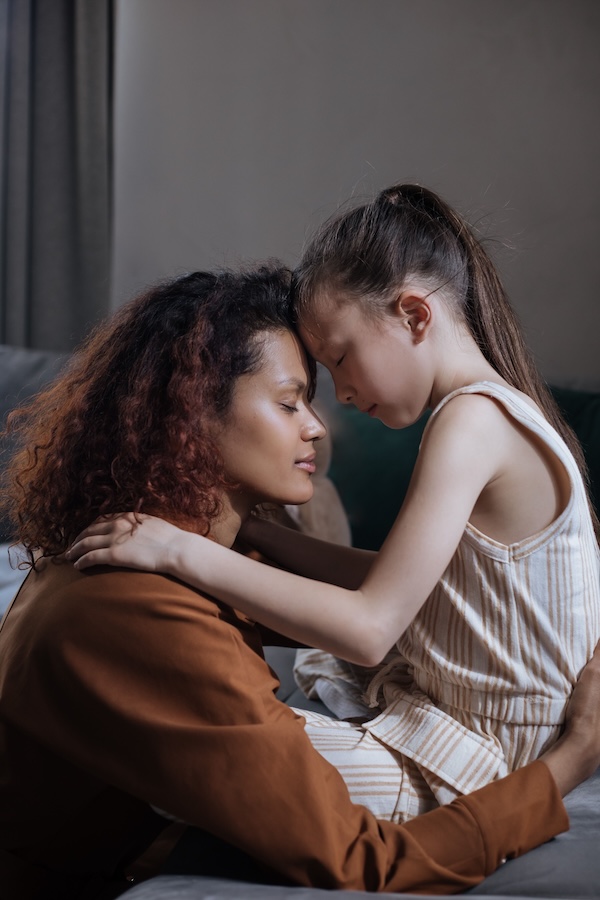
Listen without drawing conclusions
Naming the concrete need avoids reducing every social experience to the giftedness label.
When “being different” becomes the automatic explanation
The possibility of giftedness can open a discussion about interests, conversational pace, or the need for chosen relationships. It becomes less useful if it leads to believing other children will never understand.
Returning to a specific situation helps identify an action: join an activity, ask for help with exclusion, learn to express a preference, or protect chosen time alone.
Having friends, feeling a sense of belonging, and being understood: three different questions
A child can have several friends yet feel poorly understood. They may have just one close friend and be satisfied with their social life. They may also be liked within a group without daring to show certain interests. Counting relationships is therefore not enough to assess their quality or a sense of belonging.
Friendships change with age and context. Some are based on play, others on a shared interest, trust, humor, or support. A child may find satisfying connections at school, in an extracurricular activity, within the family, or online depending on age and supervision. A lack of affinity within one class does not describe all their social skills.
The useful question concerns the gap between what the child wants and what they experience. A child who prefers few relationships does not necessarily have a problem. A child who seeks connection, faces repeated rejection, or feels persistently alone, however, deserves direct attention without waiting to know whether giftedness explains the experience.
Interests, conversational pace, and group rules
Interests that few others share may limit conversational opportunities, but they do not doom relationships. Children can learn to discover another person’s subject, vary a discussion’s depth, and find people elsewhere who share a passion. Friendship does not depend on perfectly equal knowledge or abilities.
The pace of interaction can matter too. Talking at length, correcting details, wanting to explain every rule, or moving quickly between ideas may be experienced differently by peers. These behaviors do not define giftedness; they are interaction habits about which concrete feedback can be offered.
Groups also have their own norms. A child may feel comfortable in a small group but lost in a noisy playground, liked in a structured club but isolated in a class. Finding settings where relationships already work helps more than concluding they cannot fit in with children their age.
Affinity
A shared interest makes meeting easier without being the only possible basis for friendship.
Reciprocity
A satisfying relationship allows each person to speak, listen, suggest ideas, and set boundaries.
Context
Noise, group size, and the degree of structure can strongly affect participation.
Rejection, conflict, or bullying: do not call everything incompatibility
An occasional disagreement and an unbalanced relationship require different responses. Bullying involves repeated behavior and a power imbalance that prevents the child from protecting themselves alone. Simply asking them to adapt better or find more interesting friends shifts responsibility in such a situation.
Signs may be indirect: fear of going to school, damaged belongings, sudden withdrawal, disturbed sleep, physical complaints, or falling grades. None proves bullying on its own, but changes in these signs warrant a prompt conversation with the child and school.
Professional support may also help when loneliness, social anxiety, or conflicts recur across settings. It should start from observed situations and relationship needs, without treating giftedness as a sufficient cause or a barrier between the child and peers.
Build relationship skills from real situations
General advice such as “reach out to others” is hard to apply. A specific situation makes it possible to practice a skill: joining a game already underway, suggesting an idea, noticing that someone wants to change the subject, negotiating a rule, or leaving an interaction that becomes unpleasant.
Adults can prepare two or three phrases and then let the child choose. For example, asking “Can I play?”, observing before joining in, or suggesting an alternative after being turned down. The aim is not a perfectly recited script, but more options in a demanding moment.
Understanding a classmate’s perspective does not mean accepting all their behavior. Children can learn to distinguish a different preference, an awkward moment, a repairable conflict, and a violation of their boundaries. This distinction protects both reciprocity and the right to step away.
Discussion afterward should remain balanced. Analyzing every interaction in detail can suggest that the child always has something to correct. It also helps to notice what was enjoyable, signs of trust, and the other person’s gestures that show a shared relationship.
When children consistently hide their interests, language, or reactions to be accepted, the cost deserves discussion. Adapting is part of every relationship, but a friendship should not require permanently erasing oneself. Finding several settings where they belong can reduce this pressure.
Scenario: a child only wants to talk about their interest
A fascinating subject can make it easier to connect with some children and drain other conversations if it leaves no room for reciprocity. The aim is not to suppress the interest or treat it as a sign of giftedness, but to help the child notice the other person’s reactions.
An adult can practice three options with them: ask the other person a question, summarize in one sentence, or ask whether they want to hear more. The child keeps their enthusiasm while giving the other person an active role.
It is also important to find settings where the interest is truly shared. Adapting need not always mean holding back; it can also mean joining a club, workshop, or compatible small group.
Respect social preferences without overlooking distress
Some children recover better alone and prefer less frequent interaction. This preference does not need correcting if it is chosen, flexible, and compatible with a few satisfying relationships. The goal is not to reach a standard number of friends.
Unwanted solitude is better recognized through unmet wishes, distress, and missed opportunities. A child may claim not to need anyone to protect themselves after rejection. Open questions and changes over time help make sense of that statement.
Parents should avoid comparing sociability among siblings or classmates. One very close relationship may meet one child’s needs, while another enjoys several groups. Quality and safety matter more than the form.
Digital activity needs an age-sensitive, nuanced interpretation. It can allow shared interests and maintain relationships, but also expose children to exclusion, bullying, or inappropriate contacts. Support concerns safety and reciprocity, not an automatic opposition between online and offline connections.
When a child wants more contact, the most useful actions are often modest: regularly see the same person, choose a structured activity, prepare a short invitation, and plan a manageable duration. Repetition creates the familiarity many friendships need.
Next step
01
Listen
ask what the child wants to change without imposing a social ideal
02
Put in context
identify groups where connection is easier or harder
03
Act
support a relationship, an activity, or school intervention according to the need
Cereya Giftedness
Explore cognitive functioning without measuring sociability
Cereya Gifted Child offers an initial informative exploration of your child’s cognitive functioning through a parent questionnaire and brief age-appropriate exercises.
The assessment does not measure boredom, anxiety, learning, or self-esteem, does not report an IQ score, and replaces neither a professional assessment nor a conversation with the school.
- age-appropriate parent questionnaire
- brief cognitive exercises for the child
- results organized by dimension
- clearly explained assessment limitations
Initial summary included; detailed analysis available afterward.

Understand without labeling
The Cereya assessment measures neither social skills nor friendship quality.
FAQ
Frequently asked questions
Do gifted children have fewer friends?+
Studies do not show a universal social difficulty. The number of friends, relationship quality, and sense of belonging should be distinguished.
Is preferring to talk with adults a sign of giftedness?+
No. This preference may depend on interests, context, peer availability, and temperament. It cannot identify giftedness.
Can a gifted child have a completely ordinary social life?+
Yes. Many children identified as gifted report relationships and a sense of belonging comparable to those of peers not identified as gifted.
How can you tell whether solitude is chosen or unwanted?+
Ask the child whether the situation suits them, what they would like to experience differently, and whether they have satisfying relationships. Also observe changes in mood and activities.
What if the child feels stigmatized by the giftedness label?+
Take the experience seriously, identify the situations involved, and discuss them with the school if needed. The aim is to reduce stigma, not explain every relationship through giftedness.
When should you ask for help?+
Bullying, unwanted isolation, lasting distress, or sudden withdrawal call for prompt involvement of appropriate adults and professionals.
References and resources
The social literature often concerns adolescents identified in specific school settings; generalization should remain cautious.
- Peairs, K. F., Putallaz, M. & Costanzo, P. R. (2019). From A (Aggression) to V (Victimization): Peer Status and Adjustment Among Academically Gifted Students in Early Adolescence. Gifted Child Quarterly, 63(3), 185–200. DOI: 10.1177/0016986219838973.
- Carter, S. S., Avci, A. H. & Mammadov, S. (2025). School Experiences of Gifted Adolescents and Their Peers. Psychology in the Schools, 62(9), 3273–3284. DOI: 10.1002/pits.23537.
- Tourreix, E., Besançon, M. & Gonthier, C. (2023). Non-Cognitive Specificities of Intellectually Gifted Children and Adolescents: A Systematic Review of the Literature. Journal of Intelligence, 11(7), 141. DOI: 10.3390/jintelligence11070141. PMID: 37504784.
Explore further